




Looking for a 3rd Gen Camaro Rear End Upgrade? Here Are 10 Things You Should Know

If you’re the proud owner of a 1982–1992 F-Body, you already know the vibe. There’s nothing quite like the sleek, wedge-shaped silhouette of a 3rd Gen Camaro or Firebird. But as soon as you start throwing some serious horsepower at that chassis: whether it’s a snarling small block, a modern LS swap, or a massive turbo setup: you quickly realize that the factory drivetrain has a glaring Achilles’ heel.
We’re talking about the rear end. The stock 10-bolt back there wasn’t exactly designed to handle the “beast mode” power levels we love to build today. At Trick Chassis, we’ve spent years perfecting the art of the F-Body launch, and we’ve seen everything from shredded ring gears to snapped axles.
If you’re ready to stop crossing your fingers every time you dump the clutch, here are 10 essential things you need to know about upgrading your 3rd Gen Camaro rear end.
1. The Stock 7.5-Inch 10-Bolt is “Glass”
Let’s not sugarcoat it: the factory 7.5-inch 10-bolt is often referred to as “glass” in the gearhead community. It was designed for the relatively low-output engines of the 80s. When you add sticky tires and a high-torque launch, the housing flexes, the small ring gear deflects, and things go boom. If you’re planning on running deep into the 10s: or even the 12s on a heavy-hitting street car: upgrading isn’t just an option; it’s a necessity for your peace of mind.
2. The Unique Torque Arm Challenge
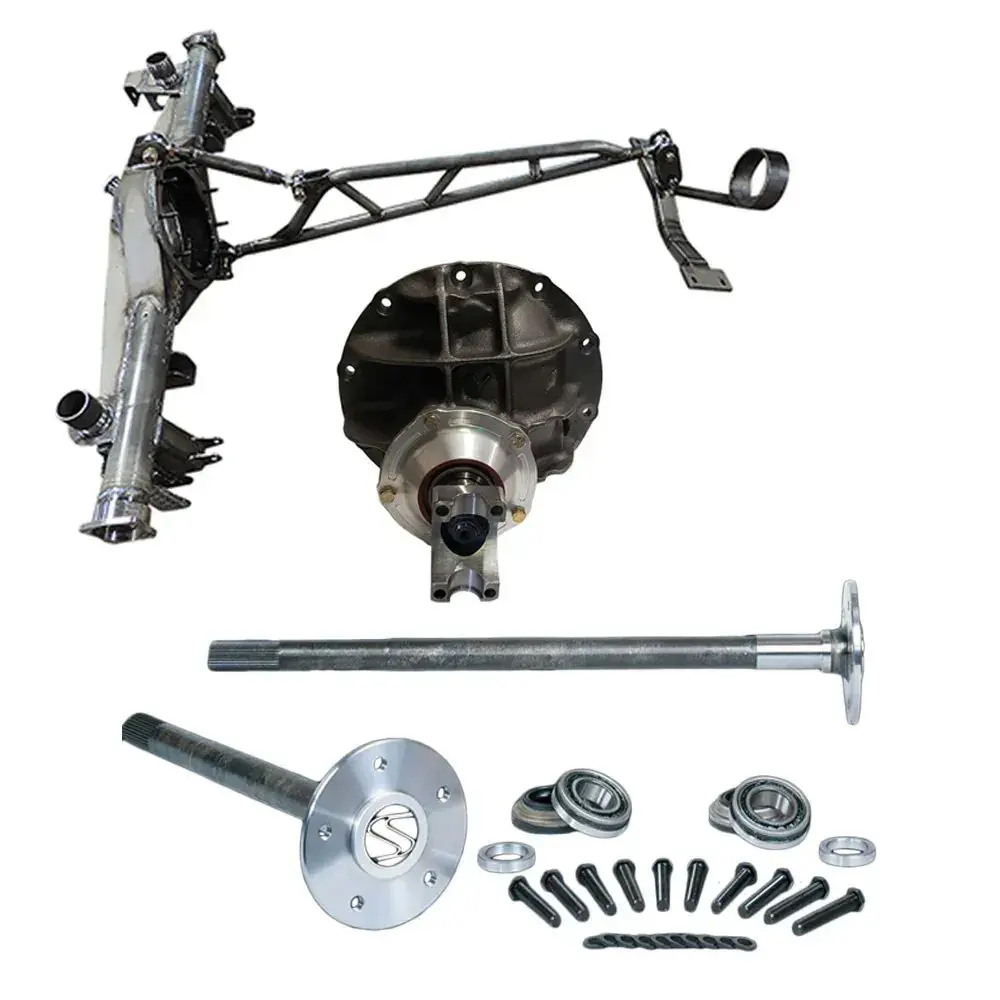
Unlike most other muscle cars, the 3rd Gen F-Body uses a torque arm suspension. This means the torque arm is literally what keeps the rear axle from rotating under load. When you upgrade your rear end, you can’t just grab any old housing from a junkyard. You need a rear end specifically engineered with a heavy-duty torque arm mount integrated into the housing. This is where a Trick Chassis Outlaw Fab 9-inch really shines, providing a robust mounting point that won’t rip off when you’re hooking hard.
3. Why the Ford 9-Inch is the King of the Strip
While some folks lean toward a GM 12-bolt for “brand purity,” the Ford 9-inch is the undisputed champion for performance builds. Why? It’s all about the design. The 9-inch features a drop-out center section, which makes gear changes a breeze. More importantly, it has an additional support bearing on the pinion gear, preventing the gear deflection that kills 10-bolts. Our fabricated 9-inch housings take it a step further by being lighter and significantly stronger than a factory cast iron unit.
4. Adjustable Torque Arms are Mandatory
If you’re stepping up to a high-performance rear end, do yourself a favor and get an adjustable torque arm. Factory arms are stamped steel and prone to bending. An adjustable chromoly torque arm allows you to fine-tune your pinion angle. This is crucial for maximizing traction and ensuring your U-joints don’t bind up and explode under pressure. Most aftermarket 9-inch housings require an adjustable arm for proper fitment anyway, so plan your budget accordingly.
5. Moving the Load Off the Transmission
In a stock 3rd Gen, the front of the torque arm is attached to the transmission tailhousing. This is a recipe for a cracked transmission case once you start making real power. Part of a proper rear end upgrade should involve a “short” torque arm setup or a dedicated crossmember mount. This moves that massive leverage force off your expensive transmission and onto the chassis, where it belongs.
6. Axle Splines: Bigger is Better
Stock 10-bolts usually come with 26 or 28-spline axles. They look like toothpicks compared to what we use in our builds. When you move to a 9-inch, you can jump up to 31 or even 35-spline axles. This increased diameter provides the shear strength needed to handle those 1.30-second 60-foot times at the track.
7. The Panhard Bar: Keeping It Centered
When you swap in a beefy new rear end, you need to make sure it stays centered under the car. The Panhard bar is responsible for the lateral (side-to-side) movement of the axle. A stock Panhard bar is flimsy. We recommend an adjustable, heavy-duty Panhard bar to ensure your wheels stay centered in the wheel wells, especially if you’ve lowered the car or moved to a wider wheel and tire setup.
8. Disc Brake Compatibility
Don’t forget about stopping! Many 3rd Gens came with drum brakes or early, less-than-ideal disc setups. When you order a new rear end from Trick Chassis, you can specify your housing ends to match modern brake kits. Whether you want to swap over your factory F-Body discs or move to a lightweight Wilwood drag racing brake kit, getting the right housing ends from the start saves you a massive headache later.
9. Narrowed Housings for “The Look”
Want to tuck some massive tires under those fenders? A common trick in the F-Body world is to order a narrowed rear end. By shortening the axle tubes by an inch or two on each side, you can run wheels with a deeper dish or more offset, allowing for more rubber without the tires sticking out past the quarter panels. This often pairs well with a rear frame notch kit to clear those oversized meats.
10. Chassis Rigidity Matters
A bulletproof rear end is only as good as the chassis it’s bolted to. 3rd Gen Camaros are notorious for chassis flex: you’ve probably seen the “T-top cracks” in the pillars of older cars. To truly get the most out of your new drivetrain, we highly recommend installing subframe connectors. They tie the front and rear of the car together, ensuring that all that power goes to the pavement instead of twisting your frame into a pretzel.
Build It Once, Build It Right
Upgrading the rear end of your 3rd Gen Camaro is one of the most rewarding modifications you can make. It transforms the car from a “maybe it’ll hold” street machine into a reliable, hard-launching beast.
At Trick Chassis, we’ve been helping builders push their cars into the 8-second range for over a decade. We don’t just sell parts; we provide the technical expertise to make sure your build is balanced, durable, and ready to dominate. Whether you’re cruising the strip or hunting for a new personal best at the track, we’ve got the hardware and the “gearhead” know-how to get you there.
Ready to take your F-Body to the next level? Check out our full range of 9-inch rearends and suspension components today. Let’s get to work!